Questioning Your Sexuality: Understanding Emotions During Identity Exploration
Feeling confused, curious, or even a little scared while questioning your sexuality is completely normal. These emotions are a natural part of exploring something deeply personal about yourself. You are not alone on this journey. This guide helps you understand common feelings that arise when exploring your sexuality and offers practical ways to process them.
Understanding your emotions is a powerful first step toward self-discovery. Many people find that structured self-reflection can bring clarity. Tools like an online our gay quiz tool can offer a private and non-judgmental space to begin exploring these feelings and attractions. In this article, we'll explore the emotional landscape of questioning your sexuality and offer practical tips to navigate it with confidence.
Understanding Emotions During "Am I Gay?" Questioning
Questioning your sexual orientation can feel like entering unknown territory. This process often brings a wide range of emotions, from excitement to anxiety. Most importantly, remember there's no 'right' or 'wrong' way to feel. Your experience is your own, and every emotion is valid.
Common Emotional Responses When Questioning Your Sexual Orientation
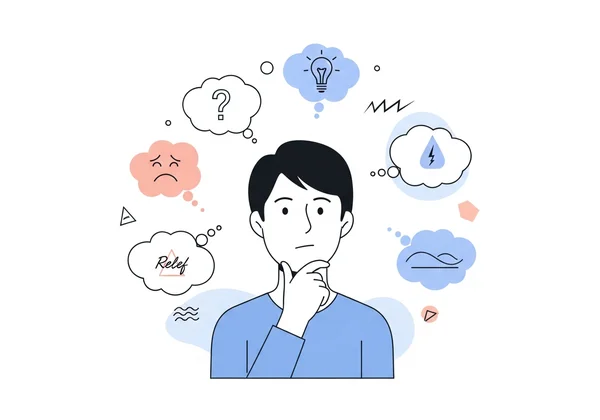
Questioning your identity can trigger a mix of feelings that might seem contradictory. Recognizing them is the first step toward managing them. Here are some common emotional responses:
-
Confusion: You might feel unsure about your attractions. One day you might feel one way, and the next, another. This uncertainty is a core part of the questioning process.
-
Curiosity: A sense of excitement and curiosity can also emerge. You may feel eager to learn more about yourself, the LGBTQ+ community, and what these new feelings mean.
-
Anxiety or Fear: It's common to worry about what others will think, how your life might change, or if you will be accepted. Fear of the unknown can be overwhelming at times.
-
Relief: For some, realizing they might not be straight can bring a profound sense of relief. It can feel like finally finding a missing piece of a puzzle that explains past feelings and experiences.
-
Loneliness: You might feel isolated, especially if you don't have anyone you feel comfortable talking to. It can seem like you're the only one going through this, but millions have walked this path before you.
Why These Feelings Are Normal and Valid
Society often presents a narrow view of relationships and attraction. This can make questioning feel like you're breaking rules. Your feelings are a natural response when you challenge these deep expectations. It takes courage to look inward and ask, "Am I gay?" or "What is my true identity?"
These emotions are not signs of something being wrong with you. Instead, they are signs that you are engaging in a deep and meaningful process of self-discovery. Allowing yourself to feel these emotions without judgment is a crucial act of self-compassion. This journey is not a race; it is a personal exploration that unfolds at its own pace.
Self-Reflection Exercises for Emotional Processing
Instead of pushing your feelings away, try to engage with them constructively. Here are a few simple exercises that can help you process what you're experiencing in a private, safe way:
- Name Your Feelings: Take a moment each day to identify what you're feeling. Simply saying to yourself, "Today, I feel anxious" or "I feel curious," can reduce the power of overwhelming emotions.
- Observe Without Judgment: Imagine your emotions are like clouds passing in the sky. Acknowledge their presence without getting swept away by them. This creates distance and helps you see them more clearly.
- Write It Down: Journaling is a powerful tool. Write about who you find yourself attracted to—whether they are real people or fictional characters. Don't worry about making sense; just let your thoughts flow.
For those who prefer a more structured approach, a confidential online sexuality quiz can provide prompts that guide your self-reflection in a low-pressure environment.
The Emotional Journey: Stages of "Coming Out" to Yourself
Coming out is often seen as an external event—telling others. But the most important "coming out" happens internally. It’s the process of acknowledging and accepting your own identity. This journey often unfolds in stages, each with its own emotional texture.
Stage 1 - Confusion and Uncertainty
This is often the starting point. You might notice attractions or feelings that don't fit the narrative you've always been told. Questions like "Am I gay?", "Am I bi?", or "Is this just a phase?" may constantly be on your mind. This stage is marked by internal conflict and a sense of being unsettled. It's a time of questioning, not of answers, and that's perfectly okay.
Stage 2 - Fear and Anxiety About Identity
As the possibility of being LGBTQ+ becomes more real, fear and anxiety can set in. You may worry about judgment from family, friends, or society. You might fear that your life will become harder or that you will lose people you care about. This fear is a protective mechanism, but it can also prevent you from moving forward toward self-acceptance.
Stage 3 - Curiosity and Exploration
If you allow yourself to move through the fear, you'll likely enter a stage of curiosity. You might start researching LGBTQ+ terms, reading stories from others, or watching movies with queer characters. This is an active phase of learning and discovery. You might start considering tools like an am I gay quiz not for a definitive label, but as a way to explore your feelings and see where they lead.
Stage 4 - Acceptance and Integration
This final stage is about acceptance. It doesn't mean you have all the answers, but it means you've become comfortable with the journey. You begin to accept your attractions as a valid part of who you are. This acceptance leads to integration, where your sexual orientation is no longer a source of conflict but simply one aspect of your rich, complex identity. This stage brings a sense of peace and authenticity.

Navigating Identity Confusion: Practical Tools for Self-Discovery
Navigating sexual identity confusion can feel overwhelming, but you don't have to do it without support. There are practical tools and strategies you can use to make the journey feel more manageable and less isolating. The key is to empower yourself with knowledge and self-care.
Creating a Safe Space for Self-Discovery
Your safety—both emotional and physical—is the top priority. Create a space where you can explore your feelings without fear of judgment. This could be a private journal, a password-protected folder on your computer, or an anonymous online profile on a supportive forum.
Websites designed with this need for privacy in mind can offer a completely anonymous platform. Creating safe spaces lets you be honest with yourself. This honesty is essential for genuine self-discovery. We've designed our platform with privacy in mind, ensuring your exploration remains completely your own.
Journaling Prompts for Processing Your Feelings
Sometimes, you just need the right question to unlock your thoughts. If you're struggling with where to start, use these journaling prompts to guide your reflection:
- What qualities am I drawn to in people, regardless of their gender?
- When have I felt most like my true self? What was I doing, and who was I with?
- If I could ignore everyone else's opinions, how would I describe my attractions?
- What are my biggest fears about my sexuality? Where do these fears come from?
- What does a happy, authentic future look like for me?
When to Seek Additional Support
While self-reflection is powerful, sometimes you may need more support. If your feelings of anxiety, fear, or sadness become overwhelming and interfere with your daily life, it may be time to seek help. Trusted resources include:
- LGBTQ+ Community Centers: Many cities have centers that offer support groups and resources.
- School Counselors: If you're a student, a guidance counselor can be a confidential source of support.
- Therapists: Look for a therapist who specializes in LGBTQ+ issues. They can provide professional guidance in a safe environment.
- Helplines: Organizations like The Trevor Project offer free, confidential support for LGBTQ+ youth.
Remember, reaching out for help is a sign of strength, not weakness.
Your Emotional Journey Is Unique, But You Don't Have to Navigate It Alone
Questioning your sexuality is a profound journey of self-discovery. It brings up complex emotions—from confusion and fear to curiosity and acceptance. Every feeling is valid and part of your unique story. Remember to be patient with yourself, honor your feelings, and know you're not alone in this journey.
This path is yours to walk, but you don't have to walk it in isolation. Creating safe spaces for reflection is a vital step in understanding yourself better.
If you're ready to explore your feelings in a structured, private way, our free gay quiz can provide insights into your attractions while giving you space to reflect without judgment. Start your test now to take the next step on your journey.
The Takeaway
Is it normal to feel confused about your sexuality?
Yes, it is completely normal. Sexuality can be fluid and complex, and many people experience a period of questioning and confusion at some point in their lives. Society's rigid expectations can make it difficult to understand feelings that don't fit into neat boxes, so allow yourself time and grace to explore without pressure.
How can I tell if I'm just going through a phase?
The idea of a "phase" can be dismissive of genuine feelings. Instead of worrying about how long it will last, focus on what you are feeling right now. Your feelings are real today, and that's what matters. Whether they change or stay the same over time, honoring your present self is the most authentic way to live.
What should I do if I'm scared to explore my feelings?
Feeling scared is a common and understandable reaction. Start small. Find private, safe ways to explore, such as journaling, reading, or using anonymous online resources. A helpful first step might be taking our comprehensive LGBTQ+ quiz to see how the questions resonate with you. Go at your own pace and remember that courage isn't the absence of fear, but taking a step despite it.
Can a quiz really help me understand my sexuality?
A quiz cannot definitively label you, and no online tool can replace deep self-reflection or professional advice. However, a well-designed quiz can be a fantastic starting point. It can provide you with thought-provoking questions and a framework to analyze your feelings and attractions in a new way. Think of it as a mirror for reflection, not a crystal ball for answers. It's one of many tools available to support your journey.