Understanding Demisexuality: Emotional Connection in LGBTQ+ Attraction
Have you ever felt like your experience of attraction is different from what you see in movies or hear from friends? Perhaps you only feel drawn to someone after you've built a strong emotional bond with them. Many people discover that their feelings don't fit neatly into traditional categories like "gay" or "straight." You might be wondering, how can I understand my unique attraction style?
This feeling of needing a connection first is more common than you think. If you've ever questioned what your attractions truly mean, learning about demisexuality could offer valuable insights. It’s one of many identities that highlight the diverse ways we connect with others. Understanding it can be a powerful step in your journey of self-discovery.
Exploring your identity is a personal journey, and tools can help you reflect. Our sexuality quiz is designed to help you think about your feelings in a new way. As you read this article, consider how these ideas relate to you. Then, you can explore further with our insightful test.
What Does Demisexual Mean?
Demisexuality is a sexual orientation where a person only feels sexual attraction to someone after they have formed a strong emotional connection. For a demisexual person, this emotional bond is a prerequisite for sexual desire. Without it, the attraction simply isn’t there, regardless of how physically attractive or charming someone might be.
Think of it this way: for many people, sexual attraction can be instant, based on looks, scent, or a first impression. For someone who is demisexual, the process is different. They might appreciate someone's appearance or enjoy their company as a friend, but the spark of sexual attraction ignites only after trust, intimacy, and a genuine emotional relationship have been established.
This doesn't mean demisexual individuals have a low libido or are uninterested in sex. It simply means their attraction is triggered by emotional intimacy rather than physical or aesthetic qualities alone. This orientation emphasizes the deep link between heart and body, making emotional connection the true foundation of their sexual feelings.
Demisexuality vs. Asexuality: Key Differences
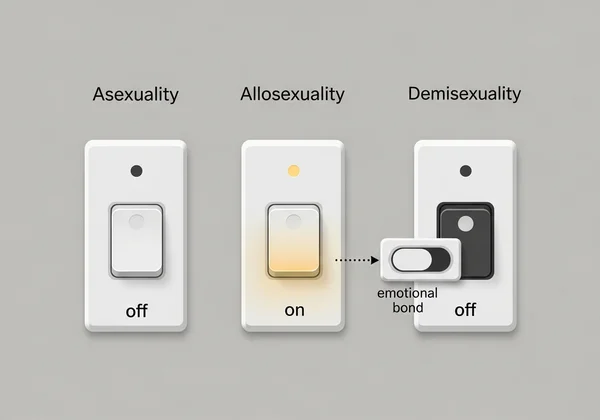
It's common to confuse demisexuality with asexuality, but they are distinct identities. Asexuality is broadly defined as experiencing little to no sexual attraction to others. An asexual person (or "ace") may still have romantic feelings, form deep relationships, and even enjoy sex for various reasons, but they don't feel that inherent pull of sexual attraction.
Demisexuality, on the other hand, is considered to be on the asexual spectrum. Demisexual people do experience sexual attraction, but only under specific circumstances—after forming a strong emotional bond. The key difference lies in the potential for sexual attraction. While an asexual person generally does not experience it, a demisexual person can and does, once the emotional prerequisite is met.
Imagine a light switch. For an asexual person, that switch for sexual attraction is typically off. For a demisexual person, the switch is there, but it can only be flipped once the power of an emotional connection is supplied. This distinction is crucial for understanding the nuances of the asexual spectrum and validating the different ways people experience attraction.
The Gray-A Spectrum: Where Demisexuality Fits
To better understand demisexuality, it helps to know about the gray-asexual (or "gray-A") spectrum. This spectrum exists between asexuality (experiencing no sexual attraction) and allosexuality (experiencing sexual attraction). People who identify as gray-asexual experience sexual attraction very rarely, only under specific circumstances, or with low intensity.
Demisexuality is one of the most well-known identities on the gray-A spectrum. It fits here because the experience of sexual attraction is conditional—it depends entirely on the presence of an emotional bond. Other gray-asexual identities might include people who only feel attraction once in their lifetime or whose feelings of attraction are very faint and fleeting.
Placing demisexuality on this spectrum helps to validate it as a real and legitimate orientation. It shows that attraction isn't just an "on or off" switch for everyone. Instead, it’s a complex and varied experience. Recognizing this diversity helps create a more inclusive understanding of human sexuality and allows more people to find a label that truly resonates with their personal experience.
Signs You Might Be Demisexual
Are you wondering if the term "demisexual" describes you? Figuring out your identity is a journey of self-reflection. There are no definitive tests, but certain patterns of feeling and behavior are common among demisexual people. Thinking about these signs might bring you clarity.
Remember, these are just guidelines, not rules. Sexuality is personal and fluid. If these points resonate with you, it could be a sign that you fall on the demisexual spectrum. This understanding can be empowering, helping you to better navigate your feelings and relationships. If you want to dive deeper into your attraction patterns, you can always start your quiz for more personalized insights.
Recognizing Emotional Prerequisites for Attraction
The core sign of being demisexual is recognizing that a strong emotional bond is necessary for you to feel sexual attraction. Think about your past crushes or attractions. Were they celebrities you saw on screen or strangers you passed on the street? Or were they close friends, partners, or people you had known and trusted for a long time?
If you find that you've only ever been sexually attracted to people you already considered good friends, you might be demisexual. You may feel confused when your friends talk about celebrity crushes or feeling instant "chemistry" with someone they just met. For you, the idea of a one-night stand or a casual fling based purely on physical attraction might feel completely foreign or unappealing.
This isn't about having high standards or being "picky." It's about how your attraction is fundamentally wired. The feeling of safety, trust, and deep understanding with another person is what opens the door to sexual feelings. If you consistently find that your heart needs to be engaged before your body is, this is a strong indicator of demisexuality.
When Romantic and Sexual Attraction Diverge
For many demisexual people, romantic and sexual attraction don't always develop simultaneously. You might feel romantically drawn to someone—wanting to go on dates, hold hands, and share your life—long before any sexual feelings emerge. This gap between romantic and sexual feelings can be a defining part of the demisexual experience.
You might be in a relationship where you deeply love and care for your partner but don't feel sexually attracted to them yet. This can be confusing for both you and your partner if you don't understand what's happening. As the emotional bond deepens over time, sexual attraction may develop later. This can be both confusing and reassuring, depending on your perspective and expectations.
This divergence can also work the other way. You might develop a powerful emotional connection with a friend and then, suddenly, find yourself sexually attracted to them, which can complicate the friendship. Understanding that your romantic and sexual timelines can be different is a key part of embracing a demisexual identity. It allows you to be patient with your feelings and communicate them more clearly to others.
Navigating Relationships as a Demisexual Person
Understanding that you're demisexual is one thing; navigating relationships with that knowledge is another. Building healthy, fulfilling connections requires open communication and finding partners who understand and respect your attraction style. It can sometimes feel challenging, but it is entirely possible to have a thriving love life as a demisexual person.
The key is self-acceptance and clear communication. When you understand and accept your own needs, you can express them more clearly to potential or current partners. This creates a foundation of trust and understanding—the very foundation a demisexual person needs to thrive. It's all part of your unique path to connection and intimacy.
Communicating Your Attraction Style to Partners
Honesty is crucial in any relationship, but it's especially important when you're demisexual. Explaining your attraction style to a partner can prevent misunderstandings and hurt feelings. You don't have to use the label "demisexual" if you're not comfortable with it, but you should explain the concept.
You could say something like, "For me, feeling sexually attracted to someone takes time. I need to feel a strong emotional connection with them first." This helps your partner understand that a lack of immediate sexual interest isn't a rejection of them. Instead, it’s an invitation to build a deeper, more meaningful bond together.
This conversation is best had early on in a relationship to set realistic expectations. It gives your partner the chance to decide if they are comfortable with a pace that prioritizes emotional intimacy. A partner who truly cares for you will respect your needs and be willing to build that connection with you, creating a stronger foundation for your entire relationship.

Finding Compatible Dating Approaches
Modern dating, with its focus on swiping and quick hookups, can feel daunting for demisexual people. However, you can find dating approaches that work for you. Instead of fast-paced apps, you might prefer platforms that emphasize detailed profiles and shared interests, allowing you to get to know someone's personality first.
Another great approach is to focus on building friendships. Getting involved in hobbies, clubs, or community groups allows you to meet people in a low-pressure environment. Friendships can develop organically, and if a strong emotional bond forms, it may naturally evolve into something more. This method aligns perfectly with the demisexual need for connection before attraction.
Ultimately, the best approach is one that feels authentic to you. Don't force yourself into dating scenarios that make you uncomfortable. Prioritize genuine connection, be patient with yourself and others, and trust that the right relationships will develop at their own pace. Exploring your own patterns can also help; our online gay quiz is a tool for self-reflection that can help clarify your feelings.
Your Journey of Self-Discovery Continues
Learning about demisexuality can help you better understand one important aspect of your unique identity. Whether this label resonates with you completely, partially, or not at all, the process of exploring it has already deepened your understanding of yourself. Every question you ask and every possibility you consider is a valuable step on your journey.
Sexuality is diverse, personal, and can even change over time. There is no right or wrong way to feel. The most important thing is to be kind to yourself and allow yourself the space to explore without judgment. Learning about different orientations like demisexuality empowers you to honor your true feelings.
Exploring your identity doesn't end here—it's a continuous journey of self-discovery that evolves with you. Our comprehensive quiz can help you continue to explore your unique attraction style with personalized insights. It's a safe, private space to reflect on your emotions and connections. Ready to gain deeper clarity? Take our free quiz today to continue your journey.
Frequently Asked Questions About Demisexuality
Can I still identify as gay or straight if I'm demisexual?
Yes, absolutely! Demisexuality describes how you experience attraction (i.e., only after an emotional bond), while orientations like gay, straight, bisexual, or pansexual describe who you are attracted to. The terms can be used together. For example, a person can be a demisexual lesbian (a woman who is only sexually attracted to other women she has a strong emotional bond with) or a demisexual straight man.
Is demisexuality just "being picky" in relationships?
No, this is a common misconception. "Being picky" is a conscious choice based on preferences, like wanting a partner with a certain job or hobby. Demisexuality is not a choice; it’s an innate part of a person's sexual orientation. A demisexual person cannot force themselves to feel sexual attraction without an emotional bond, just as a gay person cannot force themselves to be attracted to the opposite gender.
How can I tell if I'm demisexual or just taking things slow?
This can be a tricky distinction. Someone who prefers to "take things slow" might consciously choose to wait before becoming sexual, but they may still feel sexual attraction from the beginning. For a demisexual person, the sexual attraction is typically absent until the emotional connection is formed. Reflect on your past: did you feel the attraction and choose to wait, or did you simply not feel it at all until you got to know the person deeply? Exploring this question on a tool like our LGBTQ quiz can help you process your feelings.
Does being demisexual mean I can never experience immediate attraction?
Generally, demisexual people do not experience immediate sexual attraction. However, they can still experience other forms of instant attraction. You might be immediately romantically attracted to someone (wanting to date them), aesthetically attracted (appreciating their beauty), or intellectually attracted (drawn to their mind). These attractions can be the foundation for the emotional bond that may eventually lead to sexual attraction.